

The First Granzyme B Radiopharmaceutical Platform
We harness granzyme B in two ways. Our PET radiodiagnostic provides an early (~14-day) read[I]Timing & “real-time.” “~14-day” and “real-time” refer to common imaging timepoints under study (discrete scans), not continuous monitoring. Actual schedules, performance, and interpretation vary by protocol/indication. on whether an immunotherapy is working; we designed our radiotherapeutic to deliver targeted immune stimulation while aiming to spare healthy tissue.[II]Mechanism & selectivity limits. “Targeted immune stimulation,” “spares healthy tissue,” “precision-guided,” and “feed-forward/overcoming exhaustion” describe intended mechanisms supported primarily by preclinical or dosimetry work. Actual selectivity depends on biodistribution, dose, timing, and patient biology; absence of off-target effects is not guaranteed.
One Platform. Two Breakthrough Solutions.
Cytosite Bio’s platform harnesses the power of granzyme B (GzmB), a key protein released by the immune system’s natural killer (NK) and cytotoxic T cells to induce cell death (apoptosis).
Our innovative approach leverages granzyme B as a biological marker, enabling us to monitor immune activity in real-time[I]Timing & “real-time.” “~14-day” and “real-time” refer to common imaging timepoints under study (discrete scans), not continuous monitoring. Actual schedules, performance, and interpretation vary by protocol/indication. accurately. This real-time engagement provides unprecedented insight into the efficacy of treatments for cancer and autoimmune diseases.[III]Predictive/diagnostic performance. Any “predict/predictive,” “sensitivity/specificity,” or “trial acceleration/early readout” language reflects ongoing evaluation; figures from early-phase or limited cohorts may change in later studies.
Granzyme B biology drives two solutions:
- Radiodiagnostic (Granzyme B PET Scan). CSB-321, our radiodiagnostic PET scan imaging radioisotope, lights up granzyme B activity, allowing clinicians to see exactly where the immune system is active. This data helps predict the success of an immunotherapy,[III]Predictive/diagnostic performance. Any “predict/predictive,” “sensitivity/specificity,” or “trial acceleration/early readout” language reflects ongoing evaluation; figures from early-phase or limited cohorts may change in later studies. guiding treatment decisions and optimizing clinical trials by identifying effective therapies and switching from unsuccessful ones early, thereby saving significant time and resources. Early readouts (often within ~14 days)[I]Timing & “real-time.” “~14-day” and “real-time” refer to common imaging timepoints under study (discrete scans), not continuous monitoring. Actual schedules, performance, and interpretation vary by protocol/indication. streamline trials.
- Radiotherapeutic. CSB-421, our next-generation radioimmunotherapy, is designed to localize to tumor granzyme B and amplify the body’s natural anti-tumor response. By attaching to a small fraction of released granzyme B in the cancer and delivering immunostimulatory amounts of radiation, it signals to nearby NK and T cells to target and eliminate tumors, activating the body’s anti-tumor defenses with minimal harm to healthy tissue. This targeted amplification offers a highly effective and safe therapeutic strategy.[II]Mechanism & selectivity limits. “Targeted immune stimulation,” “spares healthy tissue,” “precision-guided,” and “feed-forward/overcoming exhaustion” describe intended mechanisms supported primarily by preclinical or dosimetry work. Actual selectivity depends on biodistribution, dose, timing, and patient biology; absence of off-target effects is not guaranteed.
Why Granzyme B is the Ideal Biomarker

Targets active killing, not just immune presence
Our platform leverages granzyme B (GzmB) as a functional biomarker, which is only released when T cells and NK cells are actively engaging and killing tumor cells. This unique feature allows us to map exactly which tumors or parts of tumors the immune system is attacking.
Unlike static markers such as PD-L1 staining or CD8 counts, which only indicate the potential for immune activity, granzyme B provides proof of ongoing cell killing.[IV]Comparisons to other biomarkers. PD-L1/CD8 reflects presence/phenotype; GzmB indicates functional cytotoxic activity. Modalities can be complementary; context determines utility. By homing in on active granzyme B, we ensure that our diagnostic and therapeutic agents are exceptionally precise. This accuracy is crucial: it provides our radiodiagnostic with the accurate data needed to predict if a therapy is working[III]Predictive/diagnostic performance. Any “predict/predictive,” “sensitivity/specificity,” or “trial acceleration/early readout” language reflects ongoing evaluation; figures from early-phase or limited cohorts may change in later studies. and ensures our radioimmunotherapy only targets the tumor itself—with minimal harm to healthy tissue.[II]Mechanism & selectivity limits. “Targeted immune stimulation,” “spares healthy tissue,” “precision-guided,” and “feed-forward/overcoming exhaustion” describe intended mechanisms supported primarily by preclinical or dosimetry work. Actual selectivity depends on biodistribution, dose, timing, and patient biology; absence of off-target effects is not guaranteed.

Tumor-agnostic & heterogeneity-tolerant
Granzyme B (GzmB) provides a platform that is tumor-agnostic because it targets the immune system’s activity rather than a specific antigen on a tumor. Therefore, our radiodiagnostic, CSB-321, can identify sites of granzyme B release across all cancer types, including primary tumors and metastases, regardless of their genetic makeup or phenotype.[V]Tumor-agnostic & heterogeneity. “Tumor-agnostic” derives from targeting immune activity (GzmB) rather than tumor antigens; detection requires immune killing to be present or inducible. Not all tumors/regions will generate a measurable GzmB signal.
Unlike traditional antigen-locked approaches—which are designed to target cancer cell-specific protein and can fail when that target is absent or becomes heterogeneous due to therapeutic pressure—our platform adapts. Since granzyme B is a universal marker of active killing that is “painted” onto tumors, it effectively reduces the chance of tumor escape by bypassing the need for a cancer cell-based target.[V]Tumor-agnostic & heterogeneity. “Tumor-agnostic” derives from targeting immune activity (GzmB) rather than tumor antigens; detection requires immune killing to be present or inducible. Not all tumors/regions will generate a measurable GzmB signal. The benefit is a more robust and reliable tool for a broader range of cancers, providing accurate data even when tumors are complex and diverse.

Precise Targeting Spares Healthy Tissue
The Granzyme B (GzmB) biomarker offers a level of exquisite precision because effector cells release it only at the exact site where immune cells are actively killing tumor cells. This highly localized signal ensures that our imaging and therapeutic agents are directed only to the “kill spot,” bypassing healthy tissue.[II]Mechanism & selectivity limits. “Targeted immune stimulation,” “spares healthy tissue,” “precision-guided,” and “feed-forward/overcoming exhaustion” describe intended mechanisms supported primarily by preclinical or dosimetry work. Actual selectivity depends on biodistribution, dose, timing, and patient biology; absence of off-target effects is not guaranteed.
Unlike other methods that target broad, nonspecific antigens present on both cancerous and healthy cells, our approach focuses on functional, real-time immune activity. The benefit is a highly targeted and effective therapy that minimizes off-target effects and potential harm to healthy cells, significantly improving the safety profile for patients.[II]Mechanism & selectivity limits. “Targeted immune stimulation,” “spares healthy tissue,” “precision-guided,” and “feed-forward/overcoming exhaustion” describe intended mechanisms supported primarily by preclinical or dosimetry work. Actual selectivity depends on biodistribution, dose, timing, and patient biology; absence of off-target effects is not guaranteed. This precision also enables more accurate diagnostic insights, as we are only detecting genuine immune-mediated cell death.

Greater effectiveness with combination therapy
Our platform’s ability to measure Granzyme B (GzmB) activity makes it the ideal companion for combination therapies. The feature is our ability to detect immune activity induced by a variety of drugs and treatment modalities, from immunotherapies to chemotherapy. This function enables us to monitor and quantify the combined effect of different treatments[VI]Combination therapy variability. GzmB signals from multi-agent regimens vary by drug, sequence, dose, and timing; monitoring combinations remains an investigational approach. working together to kill cancer cells in real-time.[I]Timing & “real-time.” “~14-day” and “real-time” refer to common imaging timepoints under study (discrete scans), not continuous monitoring. Actual schedules, performance, and interpretation vary by protocol/indication.
Unlike approaches that can only track a single drug’s effect on a specific target, our platform provides a unified view of the entire immune response. The benefit is a more comprehensive picture of how a combination therapy is performing, enabling doctors and researchers to identify the most effective drug pairings quickly. Early readouts lead to more successful treatment outcomes[III]Predictive/diagnostic performance. Any “predict/predictive,” “sensitivity/specificity,” or “trial acceleration/early readout” language reflects ongoing evaluation; figures from early-phase or limited cohorts may change in later studies. and accelerate the development of potent new therapeutic combinations.[VI]Combination therapy variability. GzmB signals from multi-agent regimens vary by drug, sequence, dose, and timing; monitoring combinations remains an investigational approach.

Measure Immunotherapy Response in 14 Days—with Granzyme B Targeting
Cytosite Bio’s CSB-321 is a first-in-class radiodiagnostic that provides a clear, actionable picture of the immune response to cancer therapy. By targeting granzyme B (GzmB), our PET scan imaging agent highlights the exact locations where the immune system is actively killing tumor cells. This innovative approach could enable physicians and researchers to accurately predict whether an immunotherapy is working in as little as 14 days[I]Timing & “real-time.” “~14-day” and “real-time” refer to common imaging timepoints under study (discrete scans), not continuous monitoring. Actual schedules, performance, and interpretation vary by protocol/indication., providing crucial data to guide treatment decisions, switch to more effective therapies sooner, and accelerate clinical trials.[III]Predictive/diagnostic performance. Any “predict/predictive,” “sensitivity/specificity,” or “trial acceleration/early readout” language reflects ongoing evaluation; figures from early-phase or limited cohorts may change in later studies. Click to learn more about how CSB-321 is transforming the landscape of cancer diagnostics.
Next Level Radioimmunotherapy: Precision-Guided Tumor Elimination[II]Mechanism & selectivity limits. “Targeted immune stimulation,” “spares healthy tissue,” “precision-guided,” and “feed-forward/overcoming exhaustion” describe intended mechanisms supported primarily by preclinical or dosimetry work. Actual selectivity depends on biodistribution, dose, timing, and patient biology; absence of off-target effects is not guaranteed.
Cytosite Bio’s CSB-421 is a groundbreaking radioimmunotherapy engineered to eliminate cancer with unprecedented precision. Our therapy harnesses the power of granzyme B (GzmB) to locate and selectively amplify the body’s natural anti-tumor response.[II]Mechanism & selectivity limits. “Targeted immune stimulation,” “spares healthy tissue,” “precision-guided,” and “feed-forward/overcoming exhaustion” describe intended mechanisms supported primarily by preclinical or dosimetry work. Actual selectivity depends on biodistribution, dose, timing, and patient biology; absence of off-target effects is not guaranteed. By attaching to a fraction of granzyme B, CSB-421 summons additional immune cells to the site, creating a powerful, localized cascade of cell death that has demonstrated 100% complete response in animal studies,[VII]Preclinical/animal data. Animal or ex vivo results (including “100% complete response”) may not predict human outcomes; models/regimens differ from clinical use. all while sparing healthy tissue.[II]Mechanism & selectivity limits. “Targeted immune stimulation,” “spares healthy tissue,” “precision-guided,” and “feed-forward/overcoming exhaustion” describe intended mechanisms supported primarily by preclinical or dosimetry work. Actual selectivity depends on biodistribution, dose, timing, and patient biology; absence of off-target effects is not guaranteed. Click to discover how our targeted approach is poised to revolutionize cancer treatment.

Granzyme B Efficacy Across Multiple Cancers & Autoimmune Diseases

Melanoma
>95% Sensitivity & Specificity in Phase I Combined Melanoma & Non-Small Cell Lung Cancer (NSCLC) Clinical Trial.[III]Predictive/diagnostic performance. Any “predict/predictive,” “sensitivity/specificity,” or “trial acceleration/early readout” language reflects ongoing evaluation; figures from early-phase or limited cohorts may change in later studies.

Non-Small Cell Lung Cancer (NSCLC)
>95% Sensitivity & Specificity in Phase I Combined Melanoma & Non-Small Cell Lung Cancer (NSCLC) Clinical Trial.[III]Predictive/diagnostic performance. Any “predict/predictive,” “sensitivity/specificity,” or “trial acceleration/early readout” language reflects ongoing evaluation; figures from early-phase or limited cohorts may change in later studies.

Transplant
Granzyme B is a validated marker of organ rejection.[VIII]Investigational/Regulatory status. CSB-321 and CSB-421 are investigational, not FDA-approved. Statements describe design goals or early findings and are not medical advice or guarantees of outcome. Partners’ use, cross-references, and timelines are subject to FDA review.

Combination Therapy
Ability to explore the magnitude and timing of the immune response when adding radiation or chemo.[VI]Combination therapy variability. GzmB signals from multi-agent regimens vary by drug, sequence, dose, and timing; monitoring combinations remains an investigational approach.

Colitis
Animal and human tissue data support the use of detecting active inflammation.[VII]Preclinical/animal data. Animal or ex vivo results (including “100% complete response”) may not predict human outcomes; models/regimens differ from clinical use.

Inflammatory Lung Disease
Animal models show the ability to detect lung inflammation and responses to anti-inflammatories.[VII]Preclinical/animal data. Animal or ex vivo results (including “100% complete response”) may not predict human outcomes; models/regimens differ from clinical use.
Granzyme B Related Content
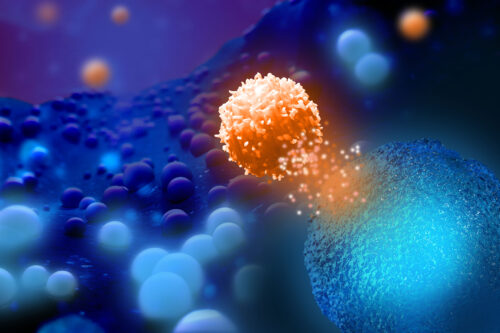
CytoSite Bio Announces Agreement with Lantheus for Granzyme B Targeted PET Imaging Radiotracer for Immunotherapy Assessment
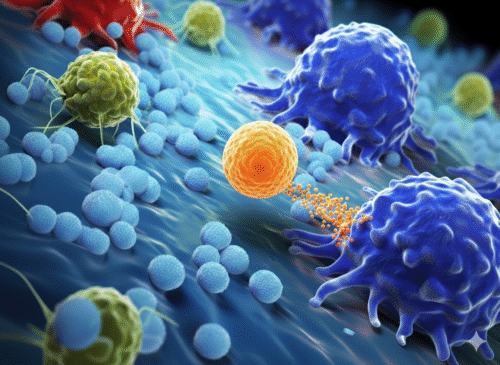
Cytosite Bio Launches Granzyme B Targeted PET Imaging Biopharmaceutical Services Program for Immunotherapy Assessment of Patient in Clinical Trials
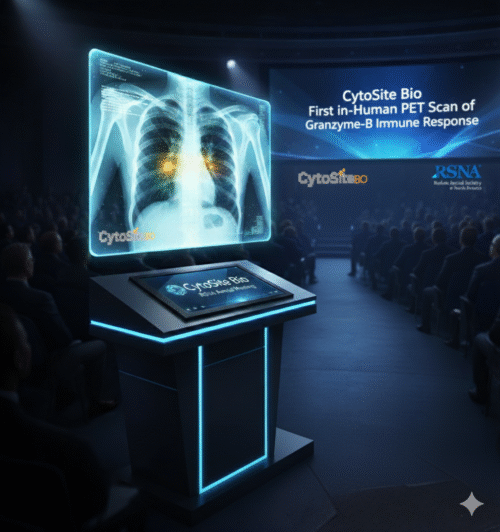
CytoSite Bio Presents First-in-Human Data at Radiological Society of North American Annual Meeting






-
I
Timing & “real-time.” “~14-day” and “real-time” refer to common imaging timepoints under study (discrete scans), not continuous monitoring. Actual schedules, performance, and interpretation vary by protocol/indication.
-
II
Mechanism & selectivity limits. “Targeted immune stimulation,” “spares healthy tissue,” “precision-guided,” and “feed-forward/overcoming exhaustion” describe intended mechanisms supported primarily by preclinical or dosimetry work. Actual selectivity depends on biodistribution, dose, timing, and patient biology; absence of off-target effects is not guaranteed.
-
III
Predictive/diagnostic performance. Any “predict/predictive,” “sensitivity/specificity,” or “trial acceleration/early readout” language reflects ongoing evaluation; figures from early-phase or limited cohorts may change in later studies.
-
IV
Comparisons to other biomarkers. PD-L1/CD8 reflects presence/phenotype; GzmB indicates functional cytotoxic activity. Modalities can be complementary; context determines utility.
-
V
Tumor-agnostic & heterogeneity. “Tumor-agnostic” derives from targeting immune activity (GzmB) rather than tumor antigens; detection requires immune killing to be present or inducible. Not all tumors/regions will generate a measurable GzmB signal.
-
VI
Combination therapy variability. GzmB signals from multi-agent regimens vary by drug, sequence, dose, and timing; monitoring combinations remains an investigational approach.
-
VII
Preclinical/animal data. Animal or ex vivo results (including “100% complete response”) may not predict human outcomes; models/regimens differ from clinical use.
-
VIII
Investigational/Regulatory status. CSB-321 and CSB-421 are investigational, not FDA-approved. Statements describe design goals or early findings and are not medical advice or guarantees of outcome. Partners’ use, cross-references, and timelines are subject to FDA review.
Are you an Academic Investigator?
Let’s discuss how we can help with your investigator-initiated trials.