
We’re on the Brink of a Game-Changing Granzyme B Guided Radiotherapeutic
In preclinical studies, our CSB-421 radioimmunotherapy achieved complete tumor responses[I] “100% Complete tumor responses” observed in defined preclinical tumor models; preclinical results may not predict human outcomes. by intensifying Granzyme B—our immune weapon against cancer—at the kill site. Studies have shown that limited exposure to healthy tissue[II]“Limited exposure to healthy tissue” based on preclinical biodistribution/dosimetry; safety and efficacy in humans have not been established. occurs, and with repeat dosing, the effect becomes stronger.[III]Stronger effect with successive doses observed in preclinical studies (feed-forward dosing profile); clinical relevance remains to be established.
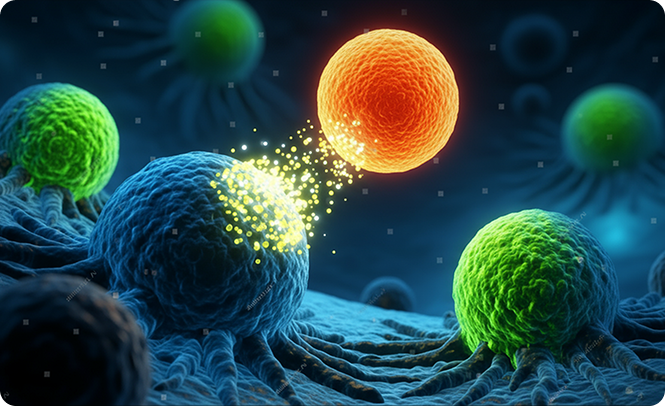
From Science to Impact

100% complete radioimmunotherapy response in preclinical studies.[I] “100% Complete tumor responses” observed in defined preclinical tumor models; preclinical results may not predict human outcomes.


Gets stronger with successive doses (preclinical).[III]Stronger effect with successive doses observed in preclinical studies (feed-forward dosing profile); clinical relevance remains to be established.
Precision Granzyme B Radioimmunotherapy
Seek. Shoot. Destroy.
CytoSite Bio’s radioimmunotherapy platform, CSB-421, is an investigational, granzyme B-targeted radiotherapeutic designed to re-invigorate the immune system to specifically kill cancer throughout the body while sparing healthy cells (aiming to reduce side effects).
After a brief IV, our CSB-421 radioisotope finds and binds to a fraction of extracellular granzyme B (GzmB)—the “bullets” NK/T immune cells fire to kill cancer—and remains outside the tumor.[IV]Targeting refers to extracellular Granzyme B at the tumor–immune interface; CSB-421 remains extracellular (does not enter tumor cells). Once docked, CSB-421 sends a “call-to-arms,” recruiting additional T/NK cells to intensify the attack.[V]Effector-cell recruitment (“call-to-arms”) reflects intended signaling at the radioisotope–GzmB complex; characterized in preclinical systems. granzyme B—not CSB-421—enters tumor cells and activates programmed cell death (apoptosis) from within.[VI]Granzyme B, not CSB-421, can enter tumor cells (perforin-dependent pathways) and initiate apoptotic programs.
We’ve designed CSB-421 to avoid the pitfalls of static-marker, geometry-only, or whole-body immune approaches, which can leave active pockets untreated, dose to healthy tissue, cause systemic immune side effects, limit the number of tumor areas treated in a course, and restrict re-treatment. Because CSB-421 targets active granzyme B where the immune system is fighting, preclinical studies showed our radiotherapeutic hit moving and changing “hot spots”[VII]“Hot spot” coverage and multi-site addressing within a course reflect design intent and preclinical observations; human safety/efficacy not established. rather than inert zones, limited exposure to healthy tissue by biodistribution/dosimetry, and addressed multiple active tumor sites within a course.[II]“Limited exposure to healthy tissue” based on preclinical biodistribution/dosimetry; safety and efficacy in humans have not been established.
Result (preclinical): complete responses under study conditions, with stronger effects on successive doses, supporting lower residual disease and reduced recurrence risk as observed in models.[VIII]Complete responses and stronger effects with successive doses observed in preclinical tumor models under study conditions; clinical relevance remains to be established.

Imagine 100% Response in Days.
No Side Effects.
100% complete response rate in preclinical combo studies
The magic of our CSB-421 radiotherapeutic is that it’s a beacon, not a bullet. When CSB-421 finds and binds to granzyme BCSB-421 binds extracellular Granzyme B at the tumor–immune interface and remains outside the tumor; it functions as a locator/signal, not the intracellular killer. (the bullet) near and on each tumor’s surface, the radioisotope acts like a bright flare pinned to each exact hotspot throughout the body where T and NK killer cells are firing granzyme B “bullets” at the tumor.
The flare’s job is to summon and guide more killer cells to the same spot and to stay lit between immune bursts (for its half-life), so new or returning killer cells can find and encircle the hotspot even after the first wave moves on or tumors shift in size.[IX]“Stays lit between immune bursts” refers to the radioisotope’s physical half-life, providing a persistent local signal to recruit/guide effector cells. More cells show up → more granzyme B is fired, and the hotspot stays covered between waves.
Because CSB-421 keeps rehoming to the moving tumor hotspot—instead of relying on fixed labels, fixed geometry, or body-wide stimulation that can miss the moving and resizing target—our preclinical studies showed a deeper, more uniform, precision-killing granzyme-B–driven response, achieving 100% complete responses under study conditions.[X]“100% complete responses” and “complete responses under study conditions” refer to preclinical tumor models; preclinical results may not predict human outcomes. The safety and efficacy in humans have not been established. In addition, our CSB-421 radiotherapeutic treats several tumors at once, wherever granzyme B is active, which is hard with geometry-based tools or single-target drugs that consequently go untreated.
Successive treatments grow stronger each time
The first CSB-421 radioisotope dose plants a beacon near and on the surface of each tumor and calls in reinforcements—more T and NK killer immune cells gather and fire more granzyme B at that hotspot.[XI]Dose 1 beacon = CSB-421 bound to extracellular granzyme B at the tumor–immune interface; functions to recruit additional T/NK cells (signal/locator).
Between doses, more T and NK killer immune cells “learn” where these tumors are and keep watch (macrophage–effector training/monitoring), so the site stays primed rather than cooling off.[XII]“Learn/keep watch” reflects macrophage–effector training/monitoring observed in preclinical systems between doses. When Dose 2 (and Dose 3) arrive, CSB-421 rehomes to this now-amplified hotspot, meeting a pre-loaded battlefield summoning even more killers on site and more granzyme B in play—so the planned follow-up doses hit harder and clear more tumors.[XIII]Rehoming = each dose follows current extracellular granzyme B activity (moving hotspot), not fixed labels/geometry.
By contrast, static-marker drugs follow fixed labels that can be low or lost and don’t locally recruit more killers—so later doses don’t automatically get stronger; geometry-only radiation repeats dose to a mapped shape and is limited by cumulative organ-at-risk exposure, which constrains re-irradiation at the shifting rim;[XIV]Re-irradiation in geometry-based RT is constrained by cumulative organ-at-risk dose. and whole-body immune stimulators act everywhere, where systemic toxicities of healthy cells can force pauses while solid tumors may still receive uneven T/NK entry—so later cycles aren’t reliably stronger.[XV]Immune-related toxicities and variable effector infiltration in solid tumors can limit systemic immune activation.
Kills only cancer, not healthy cells—avoids side effects
CSB-421, by design, concentrates only where the immune system, granzyme B, is actively attacking: it binds extracellular granzyme B (GzmB) at the tumor hotspot and stays outside cellsCSB-421 remains extracellular; granzyme B, not CSB-421, can enter tumor cells.—no active granzyme B = nowhere to dock—so healthy tissue is largely bypassed by design.[XVI]“No active granzyme B = nowhere to dock” reflects minimal binding where the signal is absent (design intent). This precision targeting[XVII]Targeting refers to extracellular granzyme B at the tumor–immune interface. reduces patient side effects.
Unlike fixed-label drugs (which can tag quiet or antigen-low areas), or body-wide immune stimulators (which can attack healthy organs and necessitate treatment pauses), CSB-421 only targets and re-targets the current tumor hotspot each dose, sparing healthy cells.[XVIII]“Limited exposure to healthy tissue” based on preclinical biodistribution/dosimetry; human safety/efficacy not established.
Result (preclinical): limited exposure to healthy tissue[II]“Limited exposure to healthy tissue” based on preclinical biodistribution/dosimetry; safety and efficacy in humans have not been established. in biodistribution/dosimetry and the ability to keep treating planned doses—rather than slowing or stopping early due to off-target effects—so more rounds can finish the job.[XIX]Comparisons reference general properties of static-marker targeting, geometry-only radiotherapy, and systemic immune stimulation; individual products vary.

Radiotherapeutics IND Enabeling Across 3 Aggressive Cancers
We’re advancing IND-enabling work across three aggressive solid tumors where patients face high unmet need and disease often appears at multiple active sites. See our pipeline for details →


The immune system’s precision warhead is granzyme B (GzmB). We first see where it’s firing, then treat exactly there—keeping focus on active tumor hotspots, not healthy tissue.[XX]Investigational. Timing, performance, and availability vary by study and patient. The safety and efficacy of this product in humans have not been established.
Cancer Strikes
Tumor cells emerge and spread to new spots; the body’s immune defenders begin to engage.
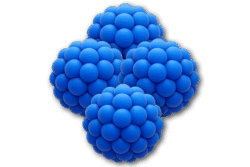
Tumor cells emerge and spread to new spots; the body’s immune defenders begin to engage.
Immune Effector Cell Activates
Our body’s organic killer T and NK immune cells’ job is to find tumors and release granzyme B “bullets” that fire at the tumor. Once inside the tumor, those bullets cause the tumor to die. But sometimes the body isn’t strong enough to fight the cancer, and it needs immunotherapy treatments. That’s where our CSB-421 steps in.
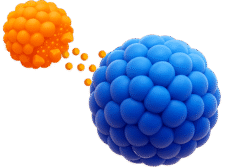
Our body’s organic killer T and NK immune cells’ job is to find tumors and release granzyme B “bullets” that fire at the tumor. Once inside the tumor, those bullets cause the tumor to die. But sometimes the body isn’t strong enough to fight the cancer, and it needs immunotherapy treatments. That’s where our CSB-421 steps in.
Patient Receives CSB-421
The patient receives a small IV dose of our investigational CSB-421 radioisotope tracer at a hospital or clinic; it starts circulating within minutes.[XX]Investigational. Timing, performance, and availability vary by study and patient. The safety and efficacy of this product in humans have not been established.

The patient receives a small IV dose of our investigational CSB-421 radioisotope tracer at a hospital or clinic; it starts circulating within minutes.[XX]Investigational. Timing, performance, and availability vary by study and patient. The safety and efficacy of this product in humans have not been established.
CSB-421 Travels & Finds Granzyme B
Once the specially designed drug is injected, the tracer rides the bloodstream and finds active sites of immune attack, where NK and T immune cells have released granzyme B that is firing towards cancer tumors. Areas without that live signal are, by design, largely ignored. This targeting strategy lets the drug prefer the real hotspots over quiet or inactive healthy non-tumorous regions.

Once the specially designed drug is injected, the tracer rides the bloodstream and finds active sites of immune attack, where NK and T immune cells have released granzyme B that is firing towards cancer tumors. Areas without that live signal are, by design, largely ignored. This targeting strategy lets the drug prefer the real hotspots over quiet or inactive healthy non-tumorous regions.
Drug Attaches to Granzyme B
The tracer binds to a small fraction of the extracellular granzyme B right at the active immune synapse—the tiny gap between an immune cell and a tumor cell (where the fight is happening). It does not enter tumor cells.[XX]Investigational. Timing, performance, and availability vary by study and patient. The safety and efficacy of this product in humans have not been established. The binding pins our CSB-421 payload to the exact place where killing is happening.

The tracer binds to a small fraction of the extracellular granzyme B right at the active immune synapse—the tiny gap between an immune cell and a tumor cell (where the fight is happening). It does not enter tumor cells.[XX]Investigational. Timing, performance, and availability vary by study and patient. The safety and efficacy of this product in humans have not been established. The binding pins our CSB-421 payload to the exact place where killing is happening.
Granzyme B & CSB-421 Cover the Tumor
Once attached, CSB-421 acts like a beacon or porch light at each tumor hotspot. It stays lit for its physical half-life, so the site remains easy for incoming immune cells to re-find between bursts of activity. This steady marker helps keep the fight centered on the right spot even as the tumor shifts or changes size.[XX]Investigational. Timing, performance, and availability vary by study and patient. The safety and efficacy of this product in humans have not been established.
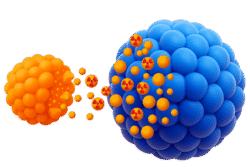
Once attached, CSB-421 acts like a beacon or porch light at each tumor hotspot. It stays lit for its physical half-life, so the site remains easy for incoming immune cells to re-find between bursts of activity. This steady marker helps keep the fight centered on the right spot even as the tumor shifts or changes size.[XX]Investigational. Timing, performance, and availability vary by study and patient. The safety and efficacy of this product in humans have not been established.
Effector Cells Summoned
The beacon summons and guides more T and NK cells to the hotspot. With more immune cells on site, the amount of granzyme B fired increases exactly where it’s needed. This local buildup amplifies the attack and sets the stage for stronger responses on planned follow-up doses.
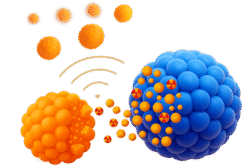
The beacon summons and guides more T and NK cells to the hotspot. With more immune cells on site, the amount of granzyme B fired increases exactly where it’s needed. This local buildup amplifies the attack and sets the stage for stronger responses on planned follow-up doses.
Granzyme B Enters the Tumor
Granzyme B—not CSB-421—slips inside the tumor cell through tiny pores formed at the synapse and flips its self-destruct switch, apoptosis (programmed cell death). CSB-421 remains outside, continuing to mark the hotspot for more immune arrivals.[XX]Investigational. Timing, performance, and availability vary by study and patient. The safety and efficacy of this product in humans have not been established.
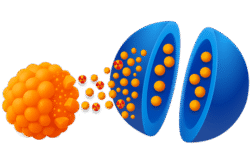
Granzyme B—not CSB-421—slips inside the tumor cell through tiny pores formed at the synapse and flips its self-destruct switch, apoptosis (programmed cell death). CSB-421 remains outside, continuing to mark the hotspot for more immune arrivals.[XX]Investigational. Timing, performance, and availability vary by study and patient. The safety and efficacy of this product in humans have not been established.
Granzyme B Kills Tumors (Apoptosis)
The tumor cell’s internal machinery shuts down, dismantles its DNA, the cell shrivels, and nearby cleanup cells carry the debris away. This process is called apoptosis.
Because the beacon persists for a time and each dose re-targets current hotspots, coverage continues as new waves of immune cells arrive. In preclinical models, planned re-dosing built on itself, producing progressively stronger effects at these sites.[XX]Investigational. Timing, performance, and availability vary by study and patient. The safety and efficacy of this product in humans have not been established.

The tumor cell’s internal machinery shuts down, dismantles its DNA, the cell shrivels, and nearby cleanup cells carry the debris away. This process is called apoptosis.
Because the beacon persists for a time and each dose re-targets current hotspots, coverage continues as new waves of immune cells arrive. In preclinical models, planned re-dosing built on itself, producing progressively stronger effects at these sites.[XX]Investigational. Timing, performance, and availability vary by study and patient. The safety and efficacy of this product in humans have not been established.
Radiotherapeutic Related Content
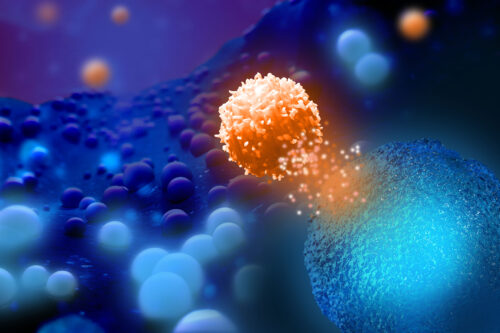
CytoSite Bio Announces Agreement with Lantheus for Granzyme B Targeted PET Imaging Radiotracer for Immunotherapy Assessment
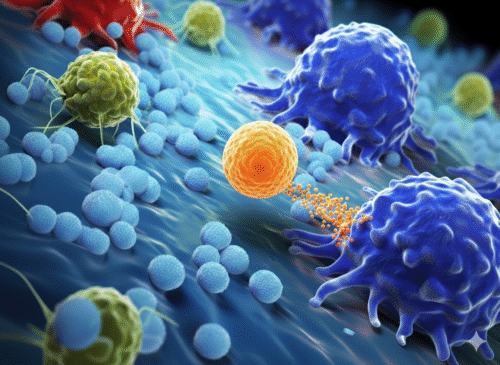
Cytosite Bio Launches Granzyme B Targeted PET Imaging Biopharmaceutical Services Program for Immunotherapy Assessment of Patient in Clinical Trials
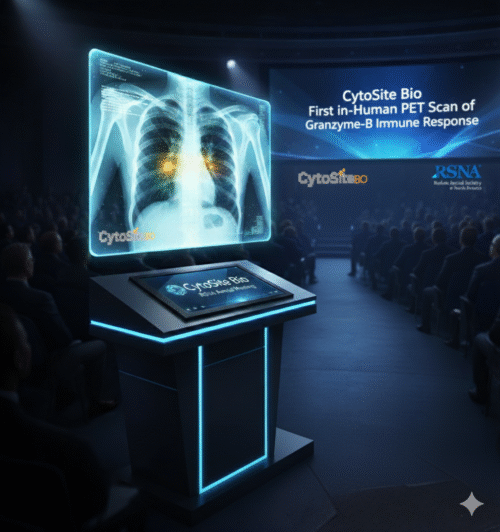
CytoSite Bio Presents First-in-Human Data at Radiological Society of North American Annual Meeting
-
I
“100% Complete tumor responses” observed in defined preclinical tumor models; preclinical results may not predict human outcomes.
-
II
“Limited exposure to healthy tissue” based on preclinical biodistribution/dosimetry; safety and efficacy in humans have not been established.
-
III
Stronger effect with successive doses observed in preclinical studies (feed-forward dosing profile); clinical relevance remains to be established.
-
IV
Targeting refers to extracellular Granzyme B at the tumor–immune interface; CSB-421 remains extracellular (does not enter tumor cells).
-
V
Effector-cell recruitment (“call-to-arms”) reflects intended signaling at the radioisotope–GzmB complex; characterized in preclinical systems.
-
VI
Granzyme B, not CSB-421, can enter tumor cells (perforin-dependent pathways) and initiate apoptotic programs.
-
VII
“Hot spot” coverage and multi-site addressing within a course reflect design intent and preclinical observations; human safety/efficacy not established.
-
VIII
Complete responses and stronger effects with successive doses observed in preclinical tumor models under study conditions; clinical relevance remains to be established.
-
IX
“Stays lit between immune bursts” refers to the radioisotope’s physical half-life, providing a persistent local signal to recruit/guide effector cells.
-
X
“100% complete responses” and “complete responses under study conditions” refer to preclinical tumor models; preclinical results may not predict human outcomes. The safety and efficacy in humans have not been established.
-
XI
Dose 1 beacon = CSB-421 bound to extracellular granzyme B at the tumor–immune interface; functions to recruit additional T/NK cells (signal/locator).
-
XII
“Learn/keep watch” reflects macrophage–effector training/monitoring observed in preclinical systems between doses.
-
XIII
Rehoming = each dose follows current extracellular granzyme B activity (moving hotspot), not fixed labels/geometry.
-
XIV
Re-irradiation in geometry-based RT is constrained by cumulative organ-at-risk dose.
-
XV
Immune-related toxicities and variable effector infiltration in solid tumors can limit systemic immune activation.
-
XVI
“No active granzyme B = nowhere to dock” reflects minimal binding where the signal is absent (design intent).
-
XVII
Targeting refers to extracellular granzyme B at the tumor–immune interface.
-
XVIII
“Limited exposure to healthy tissue” based on preclinical biodistribution/dosimetry; human safety/efficacy not established.
-
XIX
Comparisons reference general properties of static-marker targeting, geometry-only radiotherapy, and systemic immune stimulation; individual products vary.
-
XX
Investigational. Timing, performance, and availability vary by study and patient. The safety and efficacy of this product in humans have not been established.
-
XXI
CSB-421 is an investigational agent; its human safety and efficacy have not yet been established.
-
XXII
Investigational; human safety and efficacy not yet established.
Does your pipeline include an immunotherapy with a 100% response—that spares healthy tissue?
Let’s map your path to a first-in-human granzyme B-guided radiotherapeutic, with complete response and no patient side effects.